The Suffolk Journal describes a Harvard Art Museum that has learned to throw a party. On the last Thursday of every month, the museum opens its doors for free, lays out food and drink, sets up craft activities, and lets visitors wander into whatever new exhibit has just gone on display. This month the pairing was empanadas, cocktails and a free mocktail for Harvard students on one level, and, downstairs, "The Way We Never Were" — an archive of post-war American photography assembled by Barbara Norfleet.
The exhibit itself is a sharp piece of curatorial argument. Norfleet, the first woman to earn a Ph.D. in sociology at Harvard, became a curator of photography in the 1970s and built the American Professional Photographers Collection from studios across the United States. The show reads those proofs and prints not as innocent snapshots but as staged persuasion: a carefully composed fantasy of suburban prosperity, lawn-perfect masculinity and canteen-supervised teenage fun that wrote Black families and teenage rebellion out of the frame entirely.
So here is the second opinion worth having: does a night of music, colouring sheets and photo-booth props suit an exhibit about social policing and exclusion? More on that below. First, the art news itself, because the underlying material deserves attention regardless of the framing.
What exactly is "The Way We Never Were"?
It is a collection drawn from Norfleet's archive of professional studio photography, gathered from studios across America and spanning post-war proofs and prints. According to the Suffolk Journal's account, the era relied on photographers to stage and promote what post-war America was meant to see as convention. The curatorial reading is blunt: beneath the perfect facade lay a society marked by social policing and oppression, and the photographs upheld a narrow view of American standards in the hope of conformity.
The exhibit pairs the images with cultural and historical context. The post-war United States faced a severe housing shortage created by population growth; suburbia was built to meet it, and marketing and photography then worked to idealise the lifestyle they had helped invent. One photograph of two men grooming their front lawns is read as consumer envy and the performance of masculinity — with the added detail that the non-native grasses displaced local plant life and the fertilisers sustaining them were repurposed wartime chemical compounds. Readers following this should also see Cyanotype Turns Two Iron Salts and an Afternoon of Sunlight Into Unfading Prussian Blue.
What does the show say was left out of the frame?
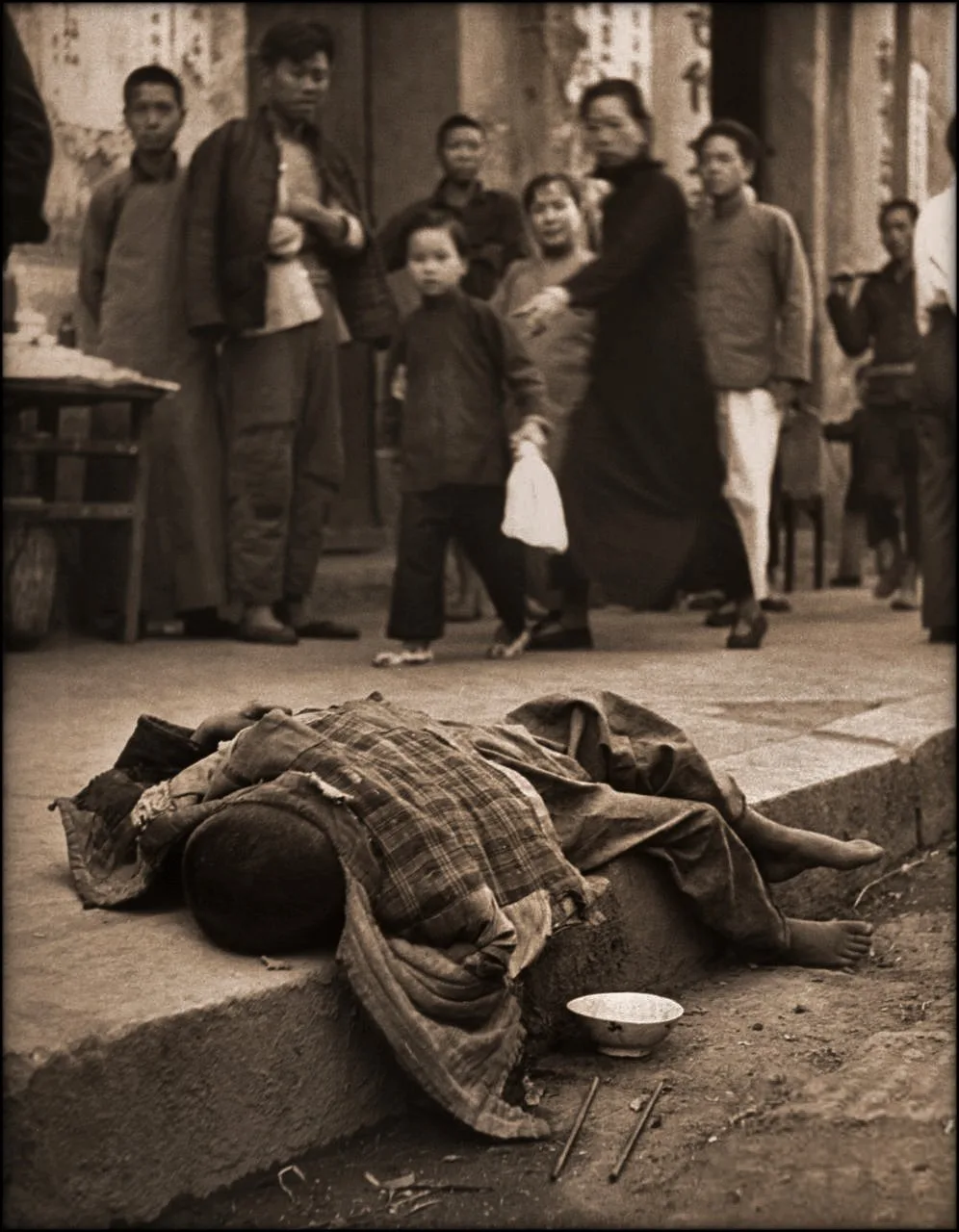
Quite a lot, and this is where the curatorial argument carries its weight. The picturesque ideal, the Journal reports, cut out the refusal of homeownership to Black families. Advertisements and familiar photos relating to African Americans were scarce until the rise of the Civil Rights Movement, and the few images displayed show marriage and happy couples kept outside mainstream media. Teen culture got its own stage management: photographs promoted supervised canteens and dance halls, codified acceptable behaviour with no profanity and no alcohol, and as scrutiny intensified, blue jeans were banned and rock 'n' roll became associated with rebellion and racial integration.
For anyone interested in how images do ideological work, this is a rich show. It sits comfortably alongside other stories we have covered about photographs and print processes doing more than they appear to — how risograph printing layers one vivid colour at a time, or how cyanotype turns two iron salts and an afternoon of sunlight into unfading Prussian blue. Process is never neutral; Norfleet's archive is the sociological version of that lesson.
Does a party night cheapen a serious exhibit?
This is the trade-off, and honest answers run both ways. The sceptical reading writes itself. An exhibit about conformity, exclusion and the manufacturing of a happy facade is being launched with drinks, empanadas and visitors taking funny-prop photos against a backdrop drawn from the collection. There is something uncomfortable about turning images of social policing into a photo opportunity — the Journal notes the props drew "genuine smiles from everyone participating," which is precisely the kind of warm communal feeling the exhibit's own argument treats with suspicion.
The defence is just as straightforward. Free entry nights remove the price barrier that keeps most people out of museums, and the craft activity had a genuinely thoughtful design: visitors took prints from photos in the special exhibition and coloured them, meant to represent the kind of colouring and reworking the curators did for the photography. That is not dumbing down; that is teaching the mechanics of image-making with your hands. The evening also offered guided tours and access to the wider collections — Buddhist art to Monet — so the party sits beside the scholarship rather than replacing it.
On balance, the pairing seems defensible, even deliberate. An exhibit arguing that images were staged to produce a desired feeling is best met by an audience that has just been made aware of how feelings get staged. But the tension is real, and visitors would do well to hold both things at once: the mocktail and the critique.
Should you go?
The Journal thinks so, and says the exhibit is worth visiting before the end of October. Free nights recur on the last Thursday of every month, each bringing a new exhibit into the gallery. If you go, look past the refreshments table: the argument underneath those cheerful post-war photographs is the more nourishing offering. And for readers weighing which cultural events justify an evening, our coverage of the Bayeux Tapestry's first UK display in over 900 years makes a useful comparison — another case of an institution using spectacle to open a door.