Fall craft ideas work best when they borrow the season's own materials: fallen leaves for printing and pressing, shortening daylight for sun-print papers set aside until next summer, and long evenings that finally suit slow handwork. The autumnal equinox — Tuesday, 22 September 2026 — marks the moment days become shorter than nights in the Northern Hemisphere, and the making calendar turns with it.
There is a reason craft communities get busier as the clocks change. According to The Old Farmer's Almanac, the word equinox comes from the Latin aequus and nox — equal night — and after it passes, nightfall arrives earlier until the winter solstice. Earlier dark means more hours indoors, and more hours indoors means the sewing basket, the sketchbook and the printing block come out of the cupboard.
Why does fall change the materials makers reach for?
The obvious answer is the leaves, and the chemistry behind them is worth knowing before you pick any up. As Fun Facts explains in its seasonal round-up, yellow and orange pigments called carotenoids are present in many leaves all summer; they simply become visible once green chlorophyll breaks down as days shorten. Red and purple tones come from anthocyanins, which some trees produce in autumn, and bright sunny days followed by cool nights can deepen the reds.
For craft purposes that matters in one practical way: the colours you gather are the colours the tree made, not the weather of the week you picked them. Sugar maples tend toward mixes of yellow, orange and red, aspens toward brilliant yellow, and oaks toward deeper russet and brown. A bundle of mixed leaves is therefore a ready-made palette, sorted by species rather than by dye lot.
What can you actually do with gathered leaves?
Three techniques keep returning in maker communities each autumn, and all of them suit a kitchen table.
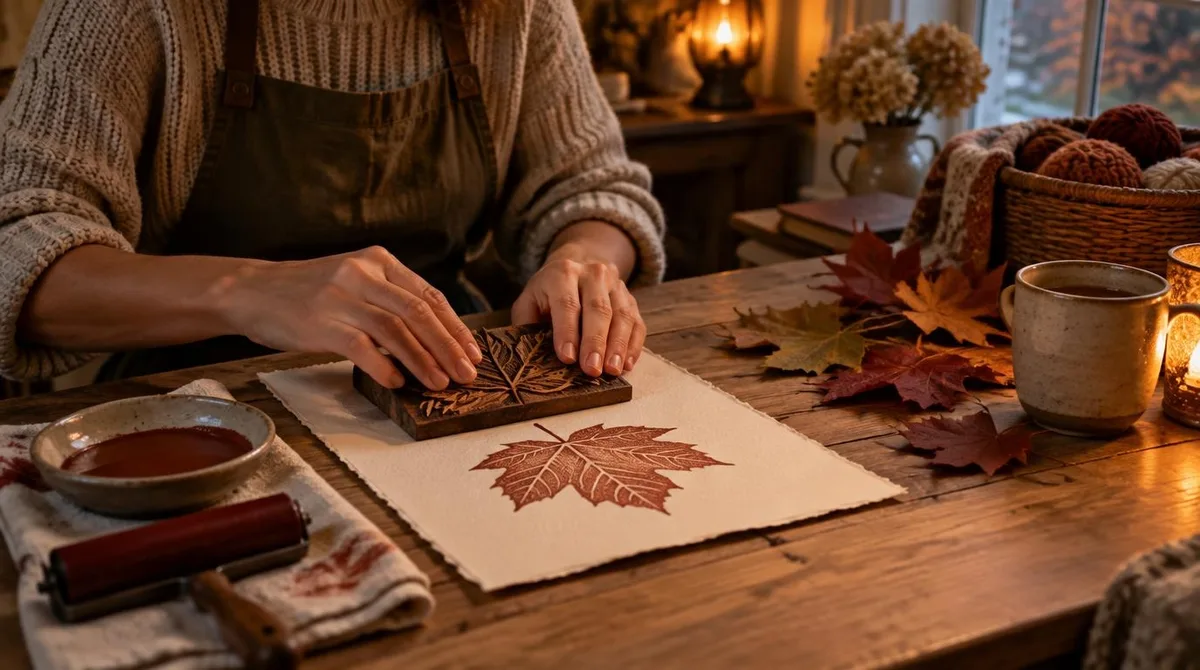
- Leaf printing. Paint the veined underside of a leaf thinly, press it onto paper or fabric, and lift it cleanly. The underside carries the structure, so the print reads as a botanical record rather than a smudge.
- Pounded-fabric prints. Fresh leaves laid on prepared cloth and tapped firmly release some of their own pigment into the fibres. Results vary enormously by species — expect softer, muddier tones than a print made with ink.
- Pressed leaves. Between sheets of absorbent paper, under even weight, leaves dry flat in a week or two and keep their colour best when dried quickly and away from direct light.
None of these require special equipment, which is largely why they circulate so freely among family craft groups each September. What they do require is fresh material: leaves that have already dried and curled will not take ink or pressure well.
Which indoor crafts suit the darker evenings?
Once the equinox has passed, the craft that fits is the one you can do under a lamp without measuring anything against daylight. Paper work is the classic autumn move — our guide to Newspaper Crafts for Adults Turn Weekend Recycling Into Elegant Decor shows how far old pages travel once you start coiling, rolling and weaving them. Fibre work follows the same logic: wool, felt and thread are warm to hold, which is part of their appeal when the first frost arrives.
Printmaking also has a seasonal rhythm. Reduction and block printing sit well beside autumn's graphic shapes — seed heads, bare branches, skeletons of leaves — and our profile of Laura Boswell Carves Her Print Blocks Away to Capture Scotland's Wild Coastline shows how a disciplined block-printing practice turns landscape into line. If you want a gentler entry point, our tutorials library collects step-by-step projects sorted by the materials you already own. For related coverage, see Laura Boswell Carves Her Print Blocks Away to Capture Scotland's Wild Coastline.
What this means for your autumn making plan
Our analysis of the season's shape is simple: fall gives you two distinct windows, and they ask for different crafts. The window before the first hard frost is for gathering — leaves, seed pods, grasses, anything that will not survive the weather. The window after is for the slow indoor work those materials feed into, plus the fibre and paper projects that carry you to the winter solstice. Makers who plan around that split tend to finish things; makers who treat autumn as one long season tend to have a jar of crumbled leaves and half a scarf by December.
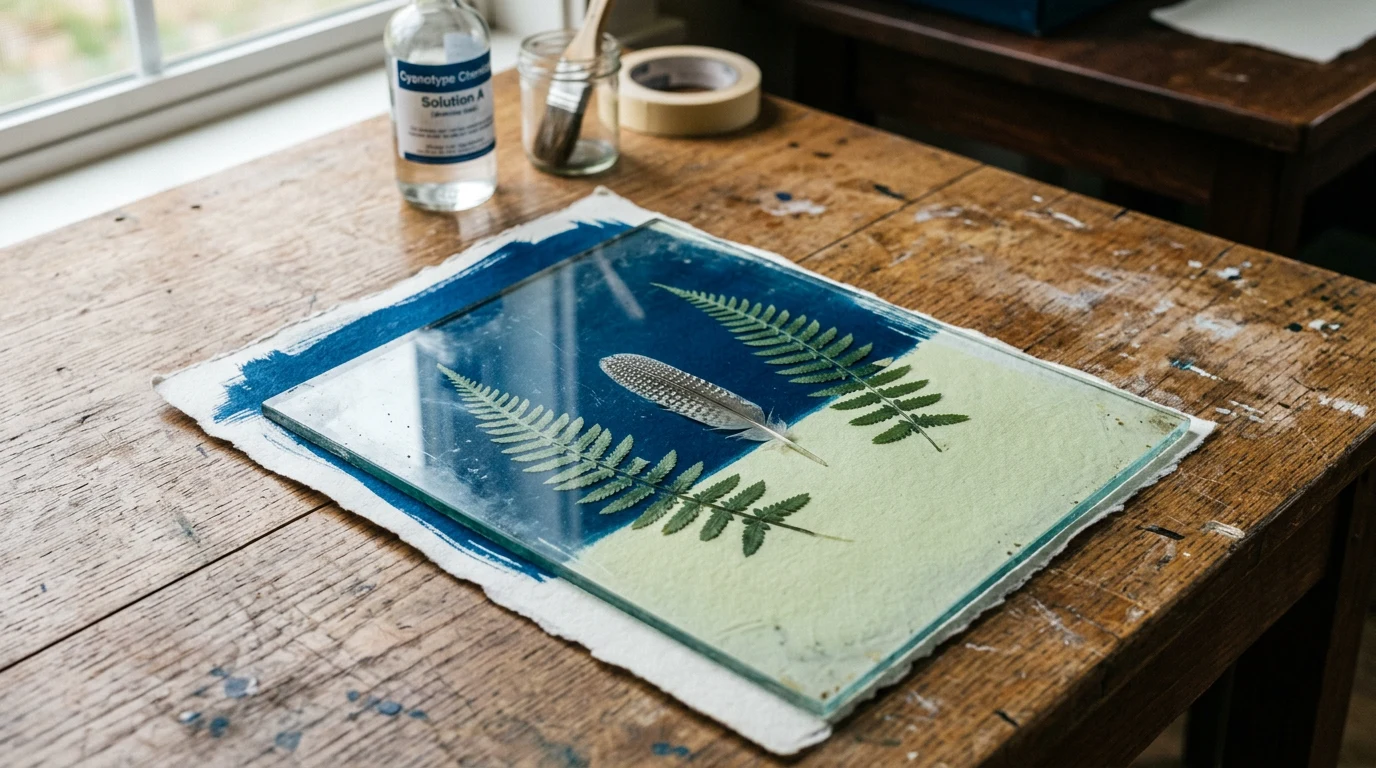
It is also worth noticing what the season does to light itself. The Almanac notes that after the equinox the Sun's arc shifts south and dawn comes later each day — which is bad news for sun-based processes. Cyanotype, which depends on strong ultraviolet light to fix its Prussian blue, becomes a fair-weather project; our explainer on how cyanotype turns two iron salts and an afternoon of sunlight into unfading Prussian blue explains why overcast autumn skies stretch exposure times badly. File it for spring and pick something lamp-lit instead. We covered a connected angle in Cyanotype Turns Two Iron Salts and an Afternoon of Sunlight Into Unfading Prussian Blue.
Where to start this week
Begin with a walk and a bag. Gather leaves while they are fresh and flat, note which tree each came from, and dry the best specimens between book pages. While they press, set up an indoor project that needs nothing from outside — a paper-weaving session, a small print block, a mending pile you have been avoiding. By the time the leaves are flat, you will have both halves of the season's craft: the material and the evening to use it in.
If you want to keep an eye on what the wider craft world is doing as the season unfolds, our Crafts News section follows exhibitions, open calls and maker stories year-round — and autumn tends to be when the year's most interesting applications and shows are announced.