A craft newsletter is a letter, not a broadcast. It works when it reads like one maker talking to another — a note about what you made, what went wrong, and what you learned. The Cambridge Dictionary defines the verb to start simply as to begin, and that is genuinely the whole of the first step: begin, with one short letter, before you feel ready.
This guide walks through the decisions that matter — your reason for writing, your cadence, your content, and the small craft of the subject line. None of it requires a budget or a following. It requires consistency, which is harder and cheaper.
Newsletter advice usually starts with tools and tactics. For makers, it should start with the same question that shapes a design practice: what is this for? A newsletter earns its opens by being useful or companionable, ideally both, and everything below follows from that.
Why should a maker write a newsletter at all?
Social platforms decide who sees your work; an email list is the one audience you own. When a follower sees your new kiln load depends on an algorithm, and whether a subscriber sees it depends on whether you sent it. That difference is the whole case for the format.
There is a quieter case too. A newsletter suits the pace of craft. Glazes take days, block carving takes weeks, and a fair season has a rhythm. A letter can carry that rhythm in a way a feed cannot. It also suits the way makers already talk — in process notes, not announcements. If you enjoy explaining how a thing is made, you already have the raw material. Our own tutorials exist because process is the most shareable thing a maker has.
What should you actually send?
The lists people open tend to share a shape: one maker, one voice, one recurring kind of letter. Before your first send, choose a format you can repeat without dread. Some reliable options:
- The process note. What you are working on this fortnight, one photograph, one thing you learned. The simplest and most durable format.
- The studio diary. A short, honest account of a week — the failed glaze test included. Readers stay for the honesty as much as the output.
- The teaching letter. One technique explained properly, in the spirit of a good explainer: what it is, why it behaves as it does, how to try it.
- The round-up. What you saw at a fair, an open studio, a book worth owning. Useful when you have news worth gathering.
Whatever you choose, keep it short. A letter a person reads in three minutes will beat a polished magazine they save for later and never open. Write the way you would write to one interested friend, then send it to everyone.
How often should you send it?
Choose a cadence you can keep on your worst week, not your best one. For most makers that means fortnightly or monthly. A weekly letter is a genuine commitment of writing time on top of making time; a quarterly one is easy to forget exists, both for you and for the reader.
Consistency matters more than frequency. A reader who expects your letter on the first Friday of the month opens it out of habit; a reader who never knows when it is coming opens it out of luck. If you must miss an issue, say so briefly in the next one. Readers forgive gaps; they do not forgive silence that stretches into a year, followed by a hard sell.
Practically: draft in the lull after a making sprint, not in the panic before a fair. Batch two letters when the studio is quiet. Keep a running note of things worth writing about — a technique that surprised you, a material question someone asked at your stall — so no send starts from a blank page.
How do you write a subject line people open?
The subject line is the whole pitch. Three principles cover most of it.
First, be specific and concrete. "Kiln opening: twelve cups, two surprises" will outperform "Update from my studio" every time, because it promises a story rather than a status. Concrete nouns and numbers do the work.
Second, front-load the interesting word. Many subject lines are truncated on phones, so the compelling part should sit in the first few words. "New glaze — and a firing that went wrong" beats "A long overdue update about my glazes".
Third, write like a person, not a marketer. Avoid ALL CAPS, exclamation marks and vague urgency. The readers you want are the ones who signed up because they like how you think; the subject line should sound like you. A useful habit: after writing a letter, find the one sentence you would say aloud to a friend, and try that as the subject line.
Preview text — the short line most email programs show beside the subject — is a second chance. Do not waste it on "View in your browser". Let it extend the promise of the subject line.
What this means for your first send
Our analysis of what makes maker letters endure comes down to this: treat the list as a small room of people who chose to hear from you, and behave accordingly. Start with fifty subscribers or five. Tell the story of one object rather than announcing everything. Ask a question now and then, and reply to the answers — replies are the clearest signal a letter has landed, and they teach you what your readers actually care about.
Getting the first subscribers is usually the easiest part: mention the letter at fairs, on your stall signage, in your online shop's order confirmation. Keeping them is a matter of the cadence and candour described above. Selling occasionally is fine — readers expect a maker to mention a shop update or a fair — but the letter should give something before it asks. A reader who has learned something or smiled twice will happily hear about your next market.
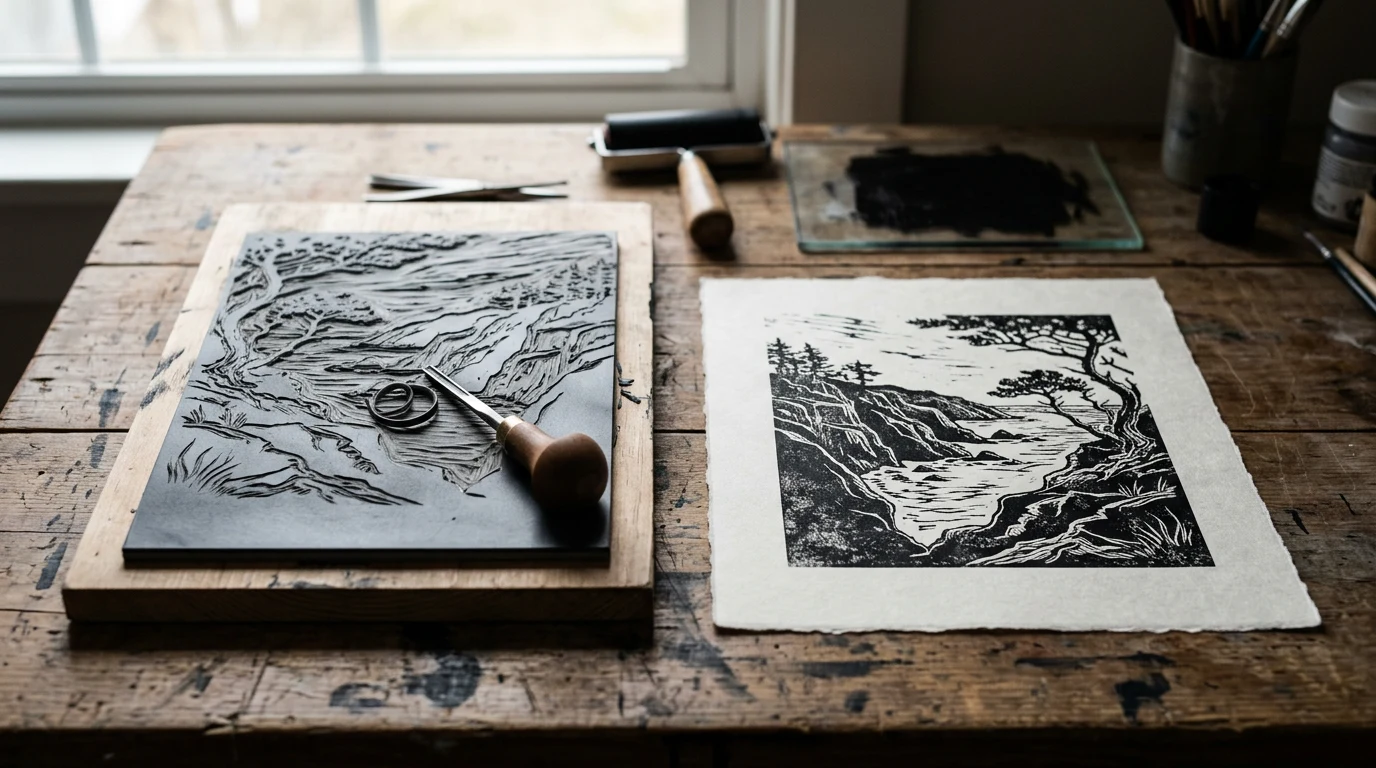
And when the letter needs pictures, treat them as carefully as the words. A single good photograph of work in progress carries a letter; a clutter of images dilutes it. If you want a sense of how much a maker's own photographs can do, see how Laura Boswell Carves Her Print Blocks Away to Capture Scotland's Wild Coastline — process images that tell the story without a single line of sales copy. This connects to our earlier piece, Laura Boswell Carves Her Print Blocks Away to Capture Scotland's Wild Coastline.
Where a craft newsletter fits in the wider picture
A newsletter is one strand in a maker's wider working life, alongside fairs, open studios and teaching. It works best when it connects them: the letter mentions the fair, the fair visitors join the list, the list hears first about a new body of work. If you are weighing where your limited promotional energy should go, it is worth reading how every stall is judged before you arrive and how open studios season works — a letter and an in-person event reinforce each other in ways neither achieves alone. For related coverage, see How to Apply to Craft Fairs When Every Stall Is Judged Before You Arrive.
The honest conclusion: a craft newsletter is not a growth hack. It is a correspondence, and correspondences reward patience. Begin small, keep the promise you made about frequency, and let the list grow at the speed your practice grows. The evidence of every long-lived maker letter points the same way — the ones people open are the ones that kept arriving.