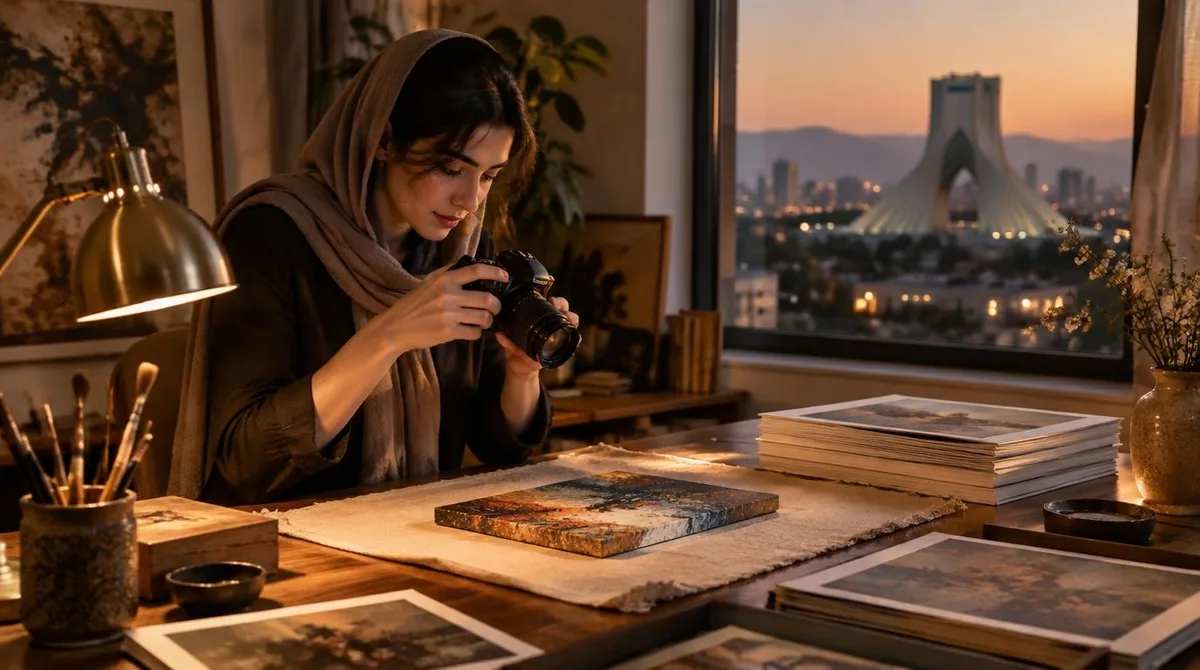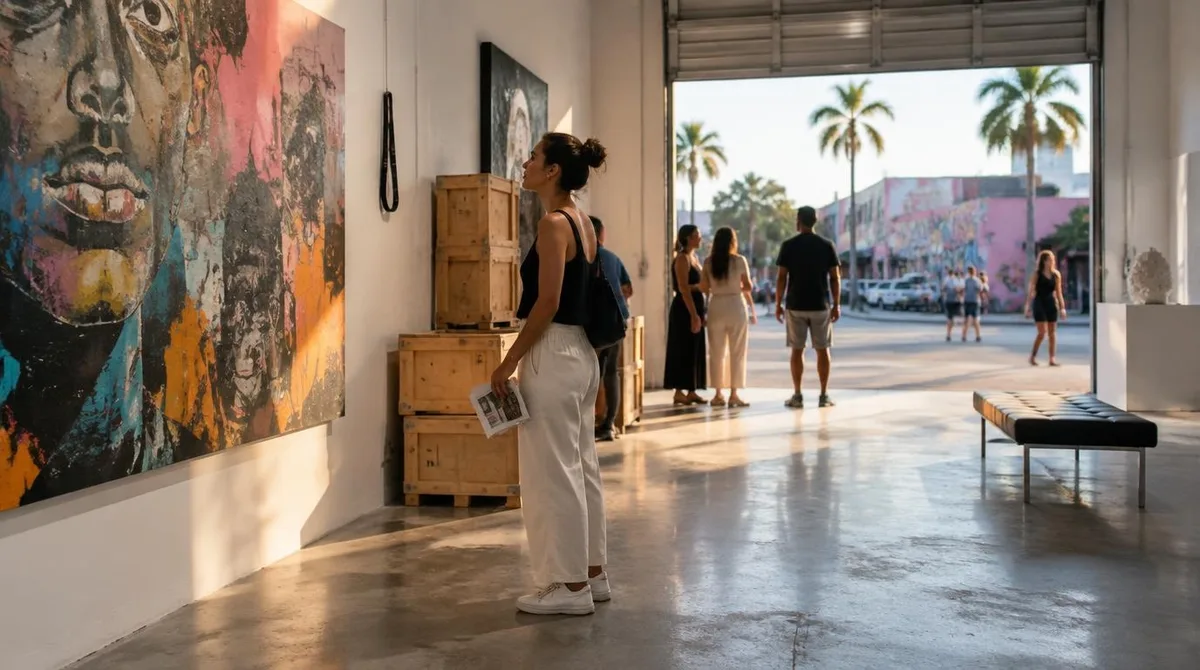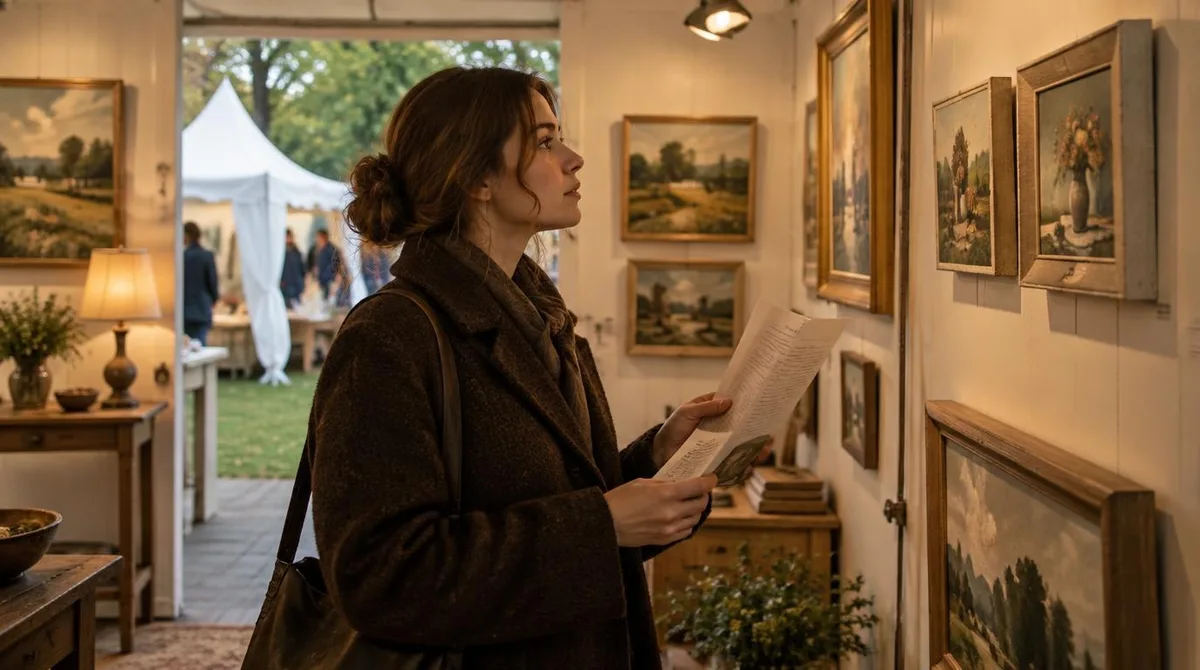
An art fair is a temporary hall where dozens of galleries gather under one roof for a few days, each with its own stand of works for sale. Walk in as a visitor and you can see more original art in an afternoon than most towns hold in a year. Nothing else in the calendar packs that many living rooms' worth of paintings, prints and sculpture into one building.
Type "art fairs explained" into a search bar and the answers usually begin with logistics, so it helps to hold two British names in mind. Frieze opened in Regent's Park in 2003 and grew into a family of fairs across four cities. The Affordable Art Fair began in Battersea Park in 1999 with a simpler promise, and its story runs through our art news coverage as well.
What actually happens inside the booths?
Each stand belongs to a gallery, and the gallery chooses what to hang. At the first Frieze in 2003, 124 galleries brought work to Regent's Park and 27,700 visitors walked through. Stands were hired at £180 per square metre in London that year, which tells you how much stock a gallery balances against its rent for the week.
Booth culture rewards looking closely. Work hangs tight together, often two or three pieces deep, and the gallerist standing in the corner knows the price, the provenance and the artist's next show. Asking a simple question about any piece is welcome; that is what the stand exists for. For related coverage, see How Galleries Work: How Galleries Decide Which Artists to Represent.
Why do previews start before the public opening?
Galleries sell from their stands before the doors open to everyone. At Frieze in 2006 the fair ran from 12 to 15 October, and a preview took place on 11 October, the evening before. Collectors arrive with lists and claim the strongest pieces first, so a preview is the quiet engine of the whole event.
The model has travelled well. Frieze added editions in New York in 2012, Los Angeles in 2019, Seoul in 2022 and Abu Dhabi in 2026, and in 2023 it acquired The Armory Show in New York and EXPO Chicago. The London fair remains the original.
How do price lists work?
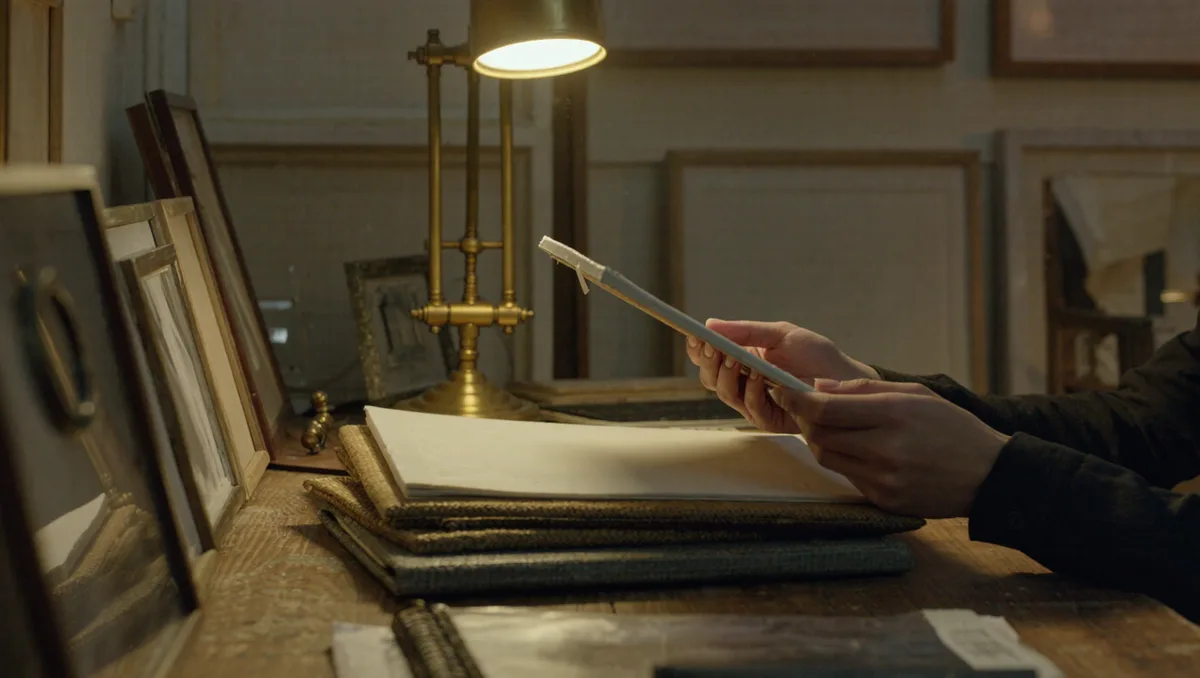
Prices rarely appear on wall labels. Most booths hold a printed or tablet-held list, and staff will read one out for any piece you ask about. There is no obligation to buy, and nobody tracks who asked. Treat the list as information, not an invoice.
The Affordable Art Fair states on its site that its mission is "to democratise the art world and make art accessible to all". Nearly 280,000 visitors come to its fairs across 15 cities each year, and the site lists a scheme for buying art in instalments. Its first Battersea edition in October 1999 drew ten thousand visitors in a relaxed and friendly environment, according to the fair's own account.
What should a first-timer do with one afternoon?
- Choose the fair that matches your budget, from the accessible end to the blue-chip end.
- Join a tour or a talk; the Affordable Art Fair fills its programme with talks, tours and hands-on workshops.
- Ask for the price list on any stand you like, just to learn how pricing feels.
- Write down three artist names and follow them after the fair closes.
Admission at the first Frieze era was modest too: the public paid £12 in London in 2004. Ticket prices today vary by fair and by day, so check each fair's site before you travel.
Conclusion: A hall that rewards a slow walk
Since those beginnings in 1999, more than 3.5 million people have visited an Affordable Art Fair worldwide and taken home over 640,000 artworks, the fair says. Fairs can look like trade events from outside, yet they are built for exactly the visitor who asks one honest question at a booth. Slow down, ask, and the pricing walls turn into reading material. For a sense of where British artists' careers travel next, see our feature on Lubaina Himid and the British Pavilion.