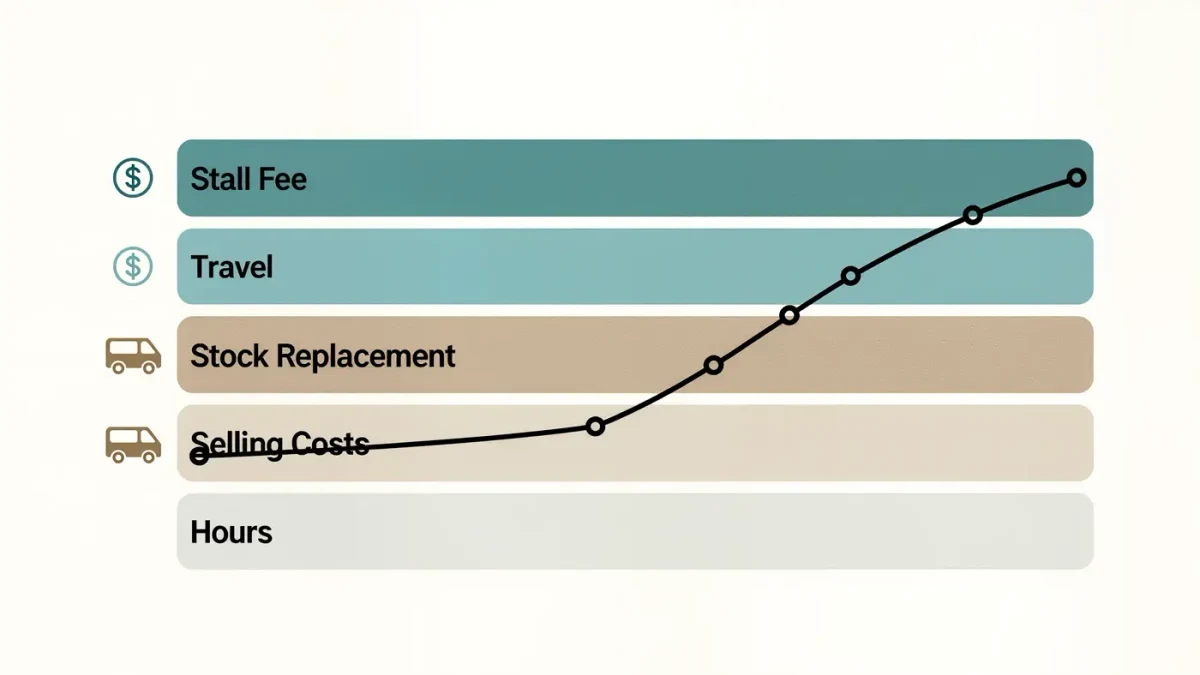
Ask a maker what a craft fair cost and they will quote the stall fee. Ask again after a season of trading and they will reach for a spreadsheet. The honest cost of a fair stacks five layers — fee, travel, stock, selling costs and hours — and the takings line has to clear all of them before anything counts as profit. Here is how experienced traders lay the arithmetic out, and how they decide whether to return next year.
Which costs go on the page before you set off?
The stall fee is the visible layer: commonly £30 to £60 for small local fairs, £150 to £400 and beyond for juried urban events in 2025. Travel sits beside it — fuel or rail fares, and for distant fairs, a night's accommodation that can quietly exceed the fee itself. Stock is the third layer and the one most often forgotten: what you sell, you must replace, so the cost of materials and making for everything that left the table belongs to the fair's account, not to next month's.
Selling costs finish the list: card reader fees — typically under 3 per cent per transaction in the UK — packaging handed out on the day, and the insurance many fairs require before you trade. Add a float of change, a cash box and something to eat, because a nine-hour day on your feet is a cost too.
How do you work out whether a fair paid?
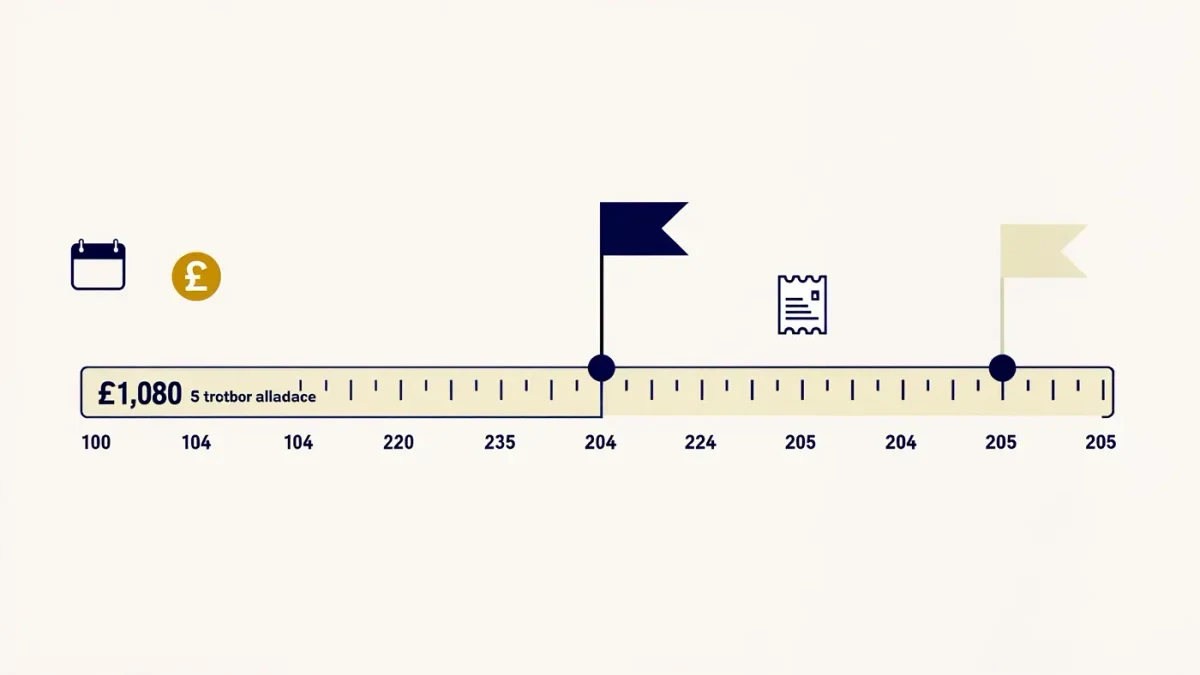
Take a worked example. A juried fair charges a £180 stall, £40 of fuel, and you take £900 on the day. Card fees run near £25 on £850 of card takings, and the stock sold carried about £280 of material and making cost. The account reads: £900 takings minus £525 of costs equals £375 — before a single hour is priced, from the eight hours of making replaced to the two days of packing, travel and standing. Priced even at the UK's April 2025 National Living Wage of £12.21, the hours alone claim around £300, which reframes the day as break-even-plus, an outcome market trader reporting would recognise instantly.
That reframe is the point. Break-even-plus on a new fair is a good result — it bought you a day of customer conversations, wholesale enquiries and market research. The failure is not modest profit; it is not knowing the number at all.
How do traders decide to go back?
Two seasons of data, the same discipline fair veterans apply everywhere. Track takings, costs and hours per event in one place, then sort the list. Fairs that clear costs comfortably and reliably earn a return slot and your best stock; middling ones get a cheaper format — shared stall, smaller range; the bottom of the table gets a polite decline, however friendly the organiser. The makers who last treat their fair calendar like a shopkeeper treats shelf space: finite, measured and ruthlessly assigned to what sells.