Dyeing wool with plants follows one gentle method: scour the wool, mordant it with alum, then steep it in a strained plant bath held around 80°C, well below a simmer. A standard mordant is aluminium sulphate at roughly 10% of the dry weight of the fibre, and the whole sequence comfortably fills a slow afternoon.
Why does wool behave differently from cotton?
Wool is a protein fibre, and protein fibres bond naturally with plant dye molecules in a way cellulose fibres like cotton can only envy. Alum — potassium aluminium sulphate — is the historic and still standard mordant for wool: it prepares the fibre to hold colour fast through washing and light. The same chemistry that welcomes dye also makes wool vulnerable, because heat, soap and agitation together will felt the scales of the fibre into a solid, shrunken mass.
The whole method therefore bends around one rule: no sudden changes. Water stays within a few degrees of the wool at every step, movement stays slow, and the bath never reaches a boil. Dyers have worked this way for millennia, and historical recipe books digitised in the Library of Congress collections record how little the fundamentals have changed. tutorials coverage.
Light and washing fastness vary from plant to plant, and honest expectations make for happier dyeing. Onion skins, madder and weld all give colours that endure years of careful use, while some fugitive sources soften within a season. Beginning with that time-tested trio spares the disappointment and teaches the chemistry at a gentle pace.
What do you need for a first dye bath?
Everything below is available from a dye supplier or a well-stocked kitchen cupboard, though the pot should be reserved for dyeing from then on:
- 100g of wool yarn wound into skeins and tied loosely in three places
- 10g of alum (potassium aluminium sulphate), plus an optional 5g of cream of tartar
- At least 100g of dried plant material — onion skins are the classic forgiving start, madder root the classic reward
- A large stainless steel or enamel pot that will never return to cooking
- A cooking thermometer, long tongs and rubber gloves
- A pH-neutral wool wash for scouring
- Access to warm water and a drying rack away from direct sun
How do you dye wool with plants, step by step?
- Scour the skeins: soak them for an hour in warm water with a little wool wash, then rinse gently at the same temperature. Wet fibre takes dye evenly; dry patches stay pale.
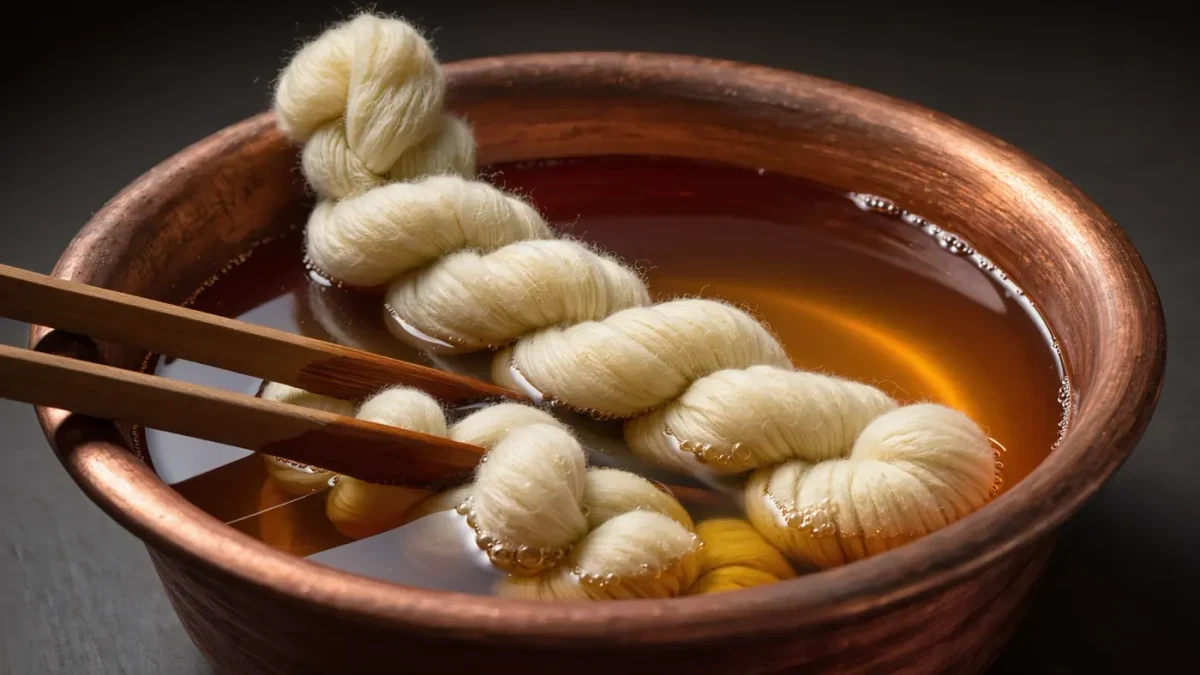
- Mordant the wool: dissolve the alum — and cream of tartar if using — in hot water in the dye pot, add the wet skeins, then heat slowly to around 75–80°C and hold for an hour before letting everything cool in the liquor. An overnight rest deepens the preparation.
- Brew the dye bath separately: soak the plant material in water for at least an hour, heat to a bare simmer for around an hour, then strain out every solid. Solids caught in the bath settle on the wool and blotch it.
- Combine: lower the wet wool into the strained, still-warm dye bath, moving the skeins gently so every fibre meets the liquor. Do not crowd the pot; wool needs room to swim or it dyes unevenly.
- Heat the bath gently back to 75–80°C and hold it there for forty-five to sixty minutes, lifting and re-laying the skeins softly a few times. Never let it boil — boiling both felts wool and dulls madder reds towards brown.
- Rest the wool in the cooling bath overnight. Colour continues to migrate into the fibre as the bath cools, and patience here is worth more than any extra heat.
- Rinse in water at the same temperature as the wool until it runs clear, squeeze — never wring — and dry the skeins flat or hanging, out of direct sunlight.
Which plants give which colours?
A first year of dyeing can be built from a short, reliable palette:
| Plant material | Shade on wool | Working note |
|---|---|---|
| Onion skins | Warm gold to rust | Generous and forgiving; a genuine first dye |
| Madder root | Deep red | Keep below a simmer for clean, bright reds |
| Weld | Clear yellow | Rewarding in a long, gentle bath |
| Nettle | Soft green-beige | Free, plentiful and muted |
| Oak galls with iron | Grey-slate | Use iron sparingly; it harshens wool |
Colours shift with the water, the season and the pot, which is part of the pleasure rather than a defect. The same madder gives strawberry reds in soft water and earthier tones in hard water, and a pinch of chalk can coax weld towards its famous clear yellow. Dyers keep sample skeins from every bath, tied and labelled, as a growing library of everything the garden has said so far.
Which mistakes lead to felting?
Nearly all of them involve breaking the no-sudden-changes rule: plunging hot wool into cold rinse water, stirring vigorously, wringing the skeins, or letting the bath gallop into a boil. None of these is a disaster in the way a broken pot is a disaster, but felted wool will never spin or knit as it should. Wool that has felted slightly can still be used for needle-felting or stuffing, so even the failures find a home.
The quieter failures are blotchy colour from crowding the pot or leaving solids in the bath, and disappointed shades from skipping the mordant. Keep notes on weights, temperatures and times from the first bath onwards; a dye notebook turns lucky afternoons into repeatable results faster than any other habit.