A limited edition print is a copy of an artwork, made in a run the artist fixes in advance and never repeats. The original — the painting, drawing or collage the print was made from — exists once. That scarcity, more than anything else, is why the original costs more. The print lets more people live with the image; the original lets one person own the thing itself.
But the gap is not only about scarcity. It is about labour, materials and risk. An original carries every hour of making in a single object. A print spreads the artist's work across many identical objects, each cheaper because none of them is alone. Understanding how a run is numbered — and who keeps the proofs — tells you most of what a price tag is quietly saying.
The question in our title begins with a word that is, as the Cambridge Dictionary puts it, a question of reason or cause: why. So let us take the reasons one at a time, starting with the number on the bottom corner of the print.
What does a fraction like 12/50 actually mean?
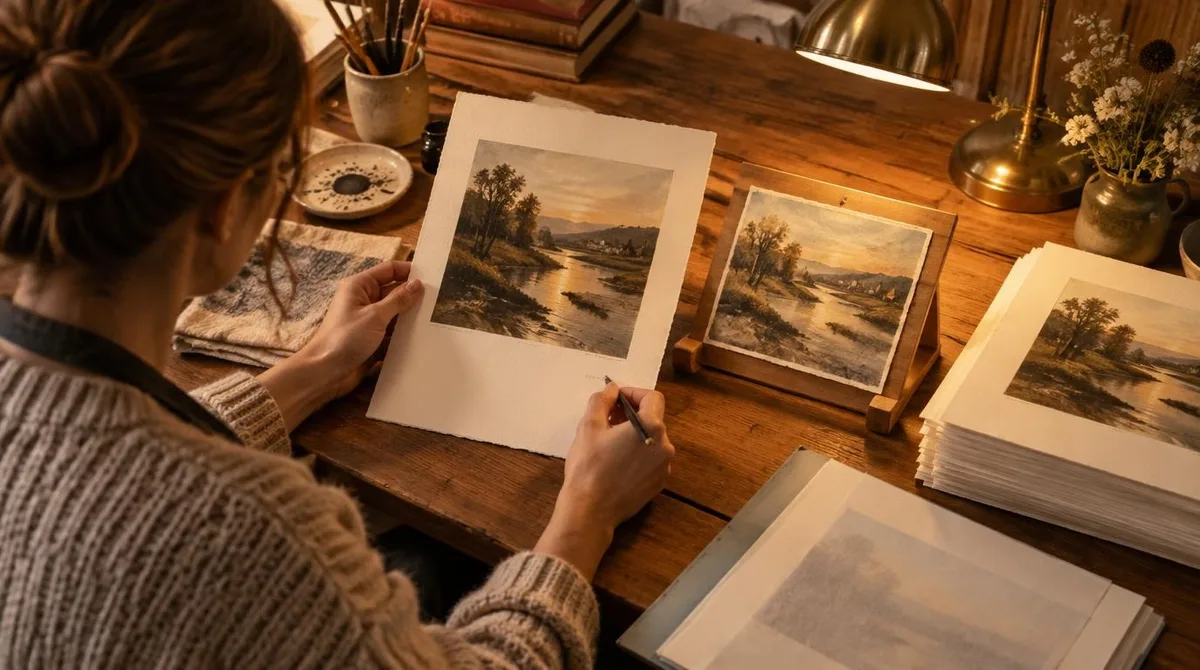
That pencil notation is the edition signature. The bottom number — 50 here — is the total size of the edition: the artist has promised to make exactly fifty prints of this image and no more. The top number, 12, is this print's place in the sequence. Neither position makes one print better than another; print 12 and print 47 come off the same image and should look the same. The fraction is a promise of scarcity, signed by the artist.
Smaller editions are usually priced higher per print. A run of twenty supports a higher price than a run of two hundred, because each copy represents a larger share of a rarer thing. There is no fixed rule for what size an edition should be — the artist chooses it, weighing how many buyers might want the image against how special each copy should feel. What matters for a buyer is that the number is stated, consistent and honoured. An edition that quietly grows after the first sales has broken its own promise, and the market tends to remember.
Sometimes you will see a print marked with letters instead of a fraction's full form — AP, PP, HC, BAT. Each has a specific job, explained below. The one thing every genuine edition shares is that the artist has signed and numbered it, usually in pencil, along the bottom edge.
What are artist's proofs and why do they exist?
Before an edition is printed, the artist and the printer pull trial copies to check colour, alignment and paper. The copies the artist keeps are artist's proofs, marked AP. They sit outside the numbered run, which makes them rarer than the edition itself — so they often carry a higher price, even though the image is identical. Historically they were the working copies; today they are a small, deliberate extra on top of the edition.
Other marks do other work. A printer's proof (PP) goes to the workshop that printed the edition. Hors commerce (HC) proofs are reserved for the artist's own use and are not for sale. A bon à tirer — French for "good to print" — is the final approved proof the whole edition is matched against. None of these should outnumber the numbered edition; a healthy edition keeps its proofs to a small handful.
For a buyer, the practical point is simple. An AP is a legitimate, collectable print — but ask how many proofs exist. If proofs and edition together balloon past what was promised, the scarcity the price relies on thins out.
Why is the original still worth so much more?
Three reasons stack on top of each other. The first is uniqueness: there is one original, full stop, and collectors pay for the object no one else can have. The second is the hand of the artist. In an original, every mark is the artist's own decision, made directly on the surface. In an edition, that hand is transferred once — through a plate, a screen, a digital file — and then repeated by a machine or a master printer.
The third reason is the market's memory. Originals are what galleries exhibit, what auctions sell and what scholars write about. That machinery of attention lifts the price of the unique object in a way no edition can fully follow. A print from the same image participates in that value, but at a distance — the way a recording relates to a live performance. Our analysis: the print is not a lesser artwork, it is a different kind of object, and its price reflects that honestly.
None of this makes prints a poor buy. For many collectors, a well-made edition by an artist they love is the sensible entry point: real work, real materials, a signed promise of scarcity, at a fraction of the original's cost. Anyone weighing the two might find it useful to read our guide to how numbering, sizes and prices hold hands from the maker's side of the table. This connects to our earlier piece, Selling Print Editions: How Numbering, Sizes and Prices Hold Hands.
How should a buyer judge an edition before paying?
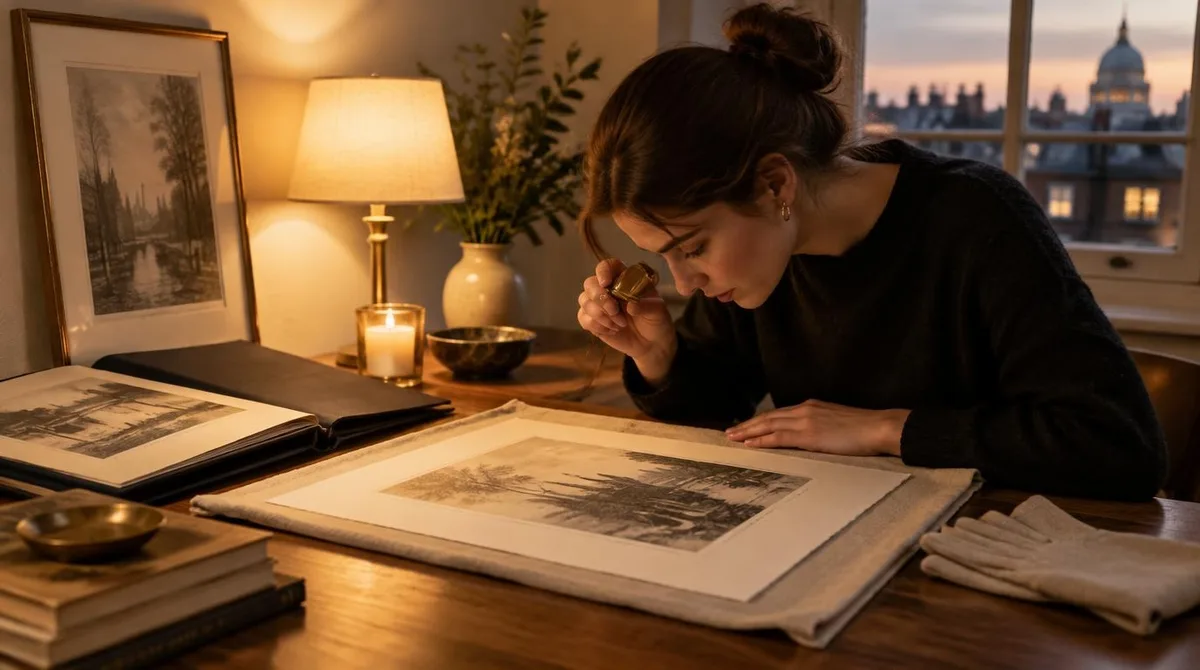
Practical steps, in the order we would ask them. First, ask the edition size and how many proofs exist, and check the answer against the pencil notation on the print itself. Second, ask whether the edition is closed — fully printed — or still open, with unsold copies that could appear later. Third, ask who printed it and on what paper; a named workshop and a good paper stock say a great deal about care.
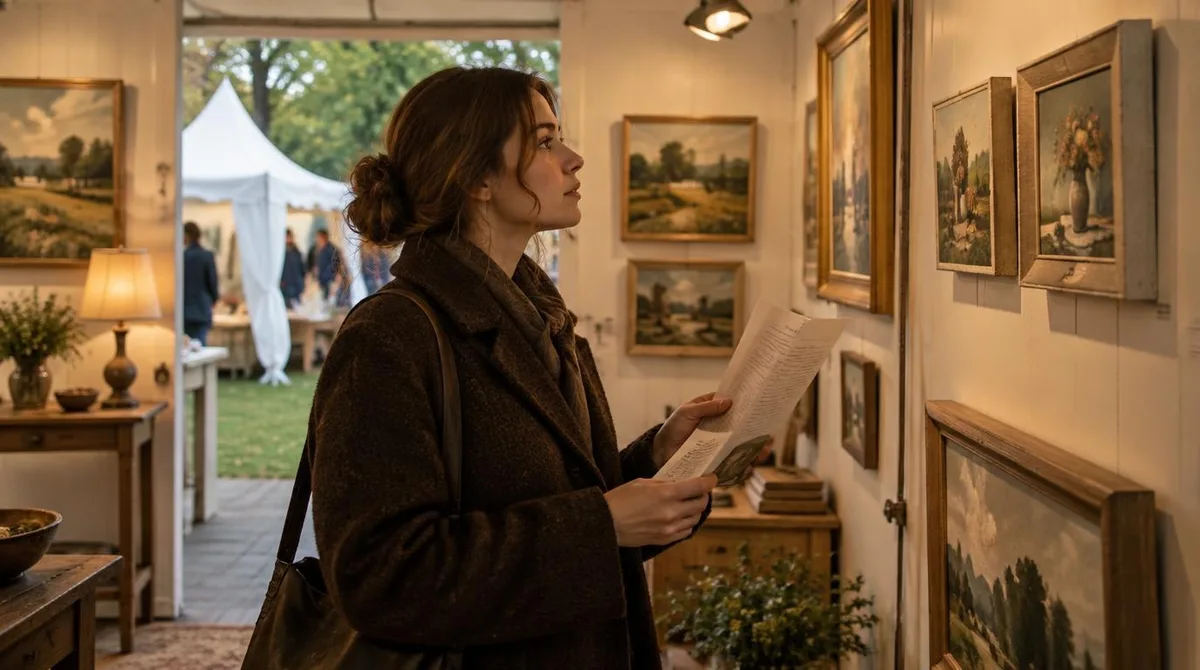
Fourth, ask for the certificate or invoice to record the edition number, so your copy is traceable if you ever resell. Fifth, compare the print's price with the artist's originals. If the gap seems too small, be curious rather than suspicious — but be curious. And if you are buying at a fair or an open studio rather than a gallery, the same questions apply; our walkthrough of a first visit to an art fair covers how prices are presented there.
One caution worth stating plainly: open editions — unlimited runs, often unsigned — are decorative products rather than collectable editions. They can be lovely and affordable, but they should be priced as such. The pencil signature and the fraction are what turn a poster into a limited edition print.
What this means for the wall above your desk
The evidence here is old and stable: editions exist to let an artist earn from an image more than once, and the numbering system exists to keep that promise visible. What remains unknown in any single purchase is the artist's future — whether demand for their work grows, which is what turns a modest print into a sought-after one. No one can buy that certainty; the honest strategy is to buy the image you want to live with, at the edition size and price you can defend to yourself.
If you are a maker rather than a buyer, the same arithmetic runs in reverse, and our piece on pricing handmade work without underpaying yourself starts from that side. And if the gallery route is the next question, our explainer on how galleries decide which artists to represent follows the thread from studio to wall. For related coverage, see How to Price Handmade Work Without Underpaying Yourself.