Picture book illustration grows through deliberate stages: matchbox-sized thumbnail roughs, expanded pencil roughs, a hand-bound dummy, and only then the final artwork. Most picture books run to exactly thirty-two pages, a format inherited from the way printing sheets fold into signatures, and every page is decided twice — once in miniature and once at full size.
Why do picture book illustrators work so small at first?
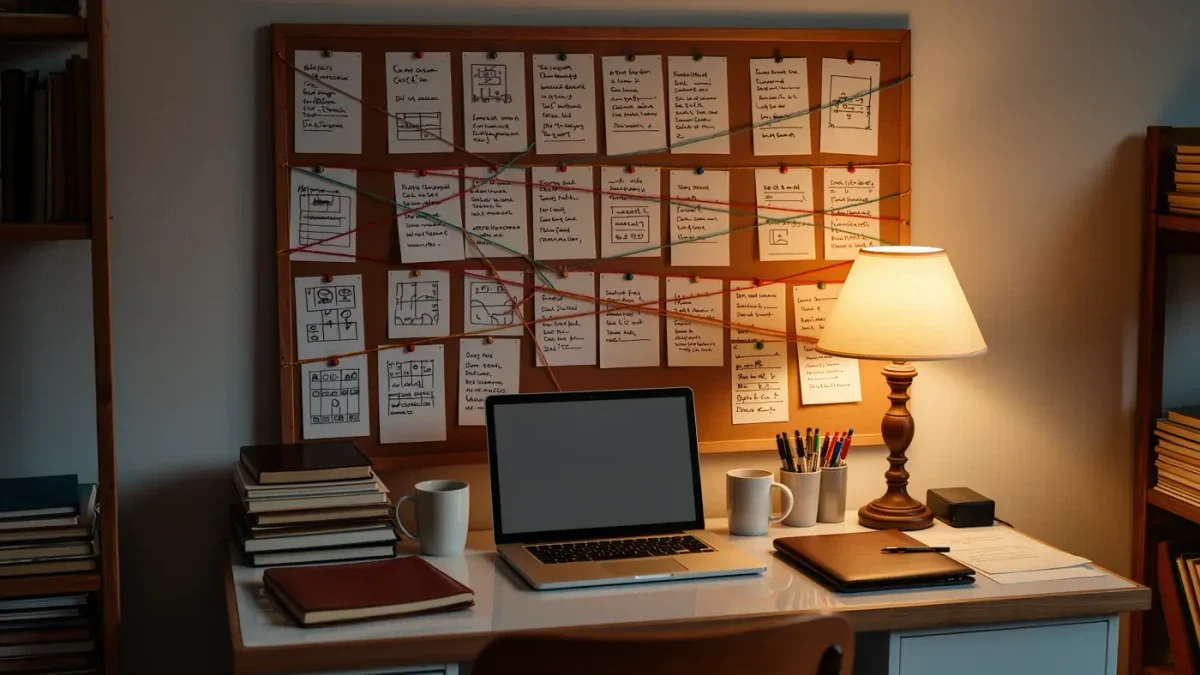
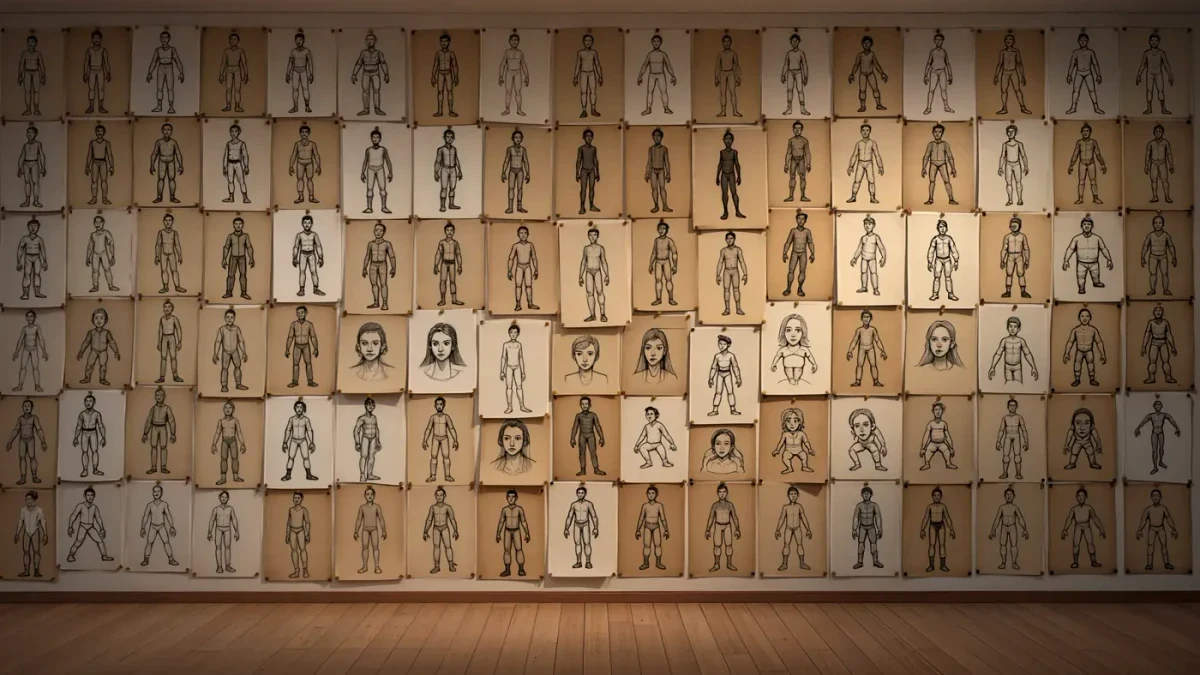
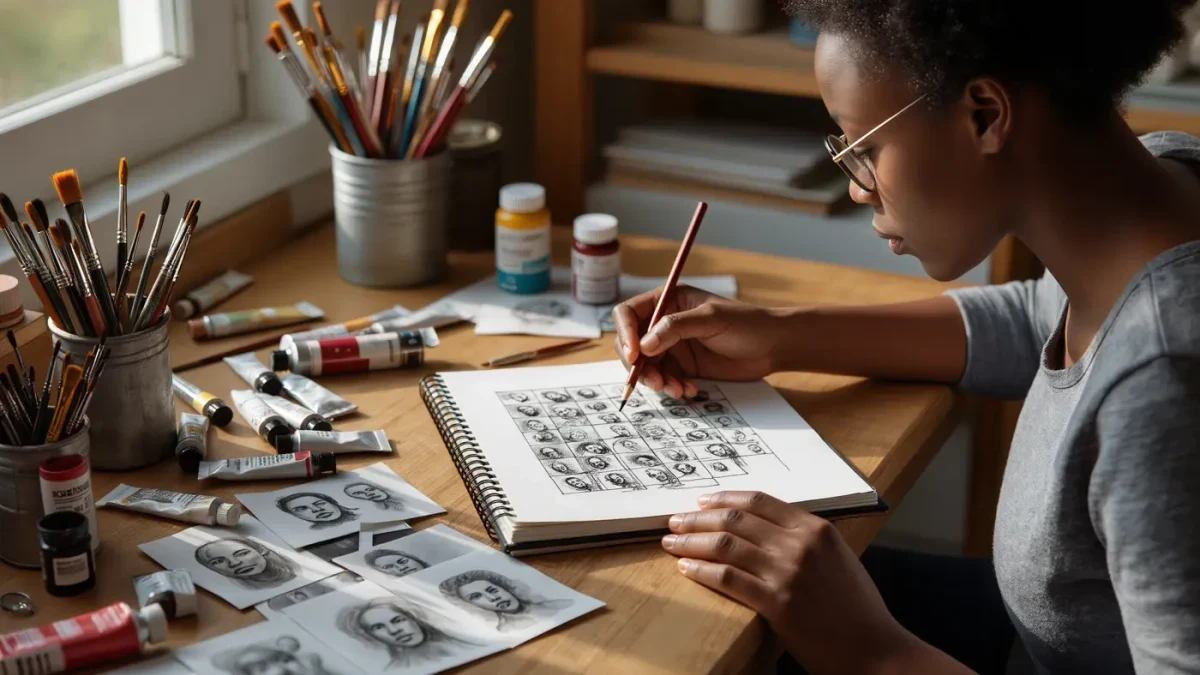
Thumbnails are drawn tiny for a practical reason: at a few centimetres tall, a spread reduces to its simplest geometry, and the illustrator must judge where the figure sits, how much room the words need and where the eye enters and leaves. Detail is impossible at that scale, which is precisely the point. An entire book can be sketched out in a day, shuffled, cut apart and redrawn, and any spread that fails as a thumbnail will not be rescued by beautiful painting later. Veteran author-illustrators describe the thumbnail stage as the only moment the whole book can be held in the mind at once, which is why so many refuse to begin anywhere else. Small dabs of colour are sometimes added over the pencil at this stage as well, testing whether the emotional temperature of the book holds from the opening page to the endpapers.
How do roughs turn a pile of sketches into a story?
Once the thumbnails hold together, the chosen spreads are redrawn larger as roughs, and the real storytelling decisions arrive. Character positions are fixed, perspective is tested and the text is broken across pages: what is shown, what is left out, when a picture pulls close and when it steps back for air. The designer joins the process here, marking where the type will sit, because words and pictures spend the whole book negotiating for the same territory. Roughs travel between illustrator, editor and designer, marked up in pencil and redrawn, sometimes for many rounds before anyone commits to paint. Colour is usually left alone until the grey pencil structure is beyond argument, because pacing rather than prettiness is what a picture book is built on.
What does a dummy reveal that loose pages cannot?
A dummy is a mock-up of the whole book: roughs printed or photocopied at final size, trimmed, folded and bound with staples or thread. Turning a dummy shows what flat pages hide. It reveals whether the rhythm of the page turns works in the hand, whether the gutter — the fold where two pages meet — swallows a vital detail, and whether the book feels right as a physical object, which is how its readers will actually meet it. A dummy is also the currency of publishing meetings. An author-illustrator pitching at a book fair such as Bologna, whose children's book fair has run since 1964, carries a dummy under the arm rather than a portfolio of finished art, because what publishers are buying is the book as a book, not a set of lovely pictures.
What happens at the final artwork stage?
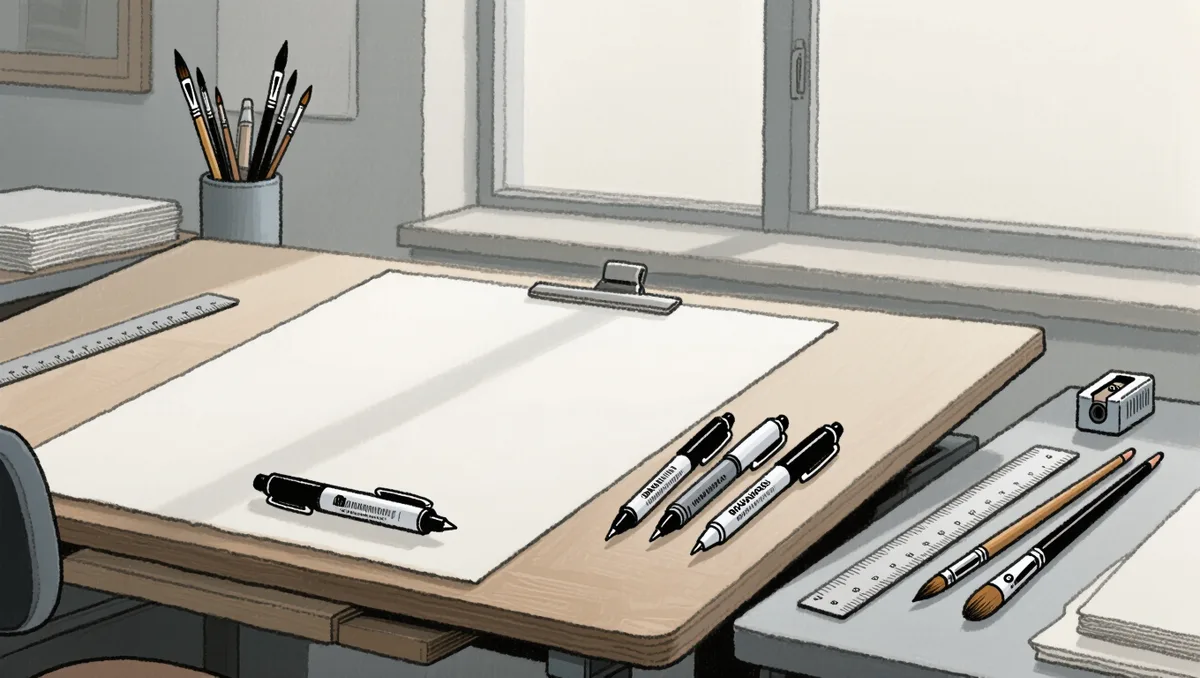
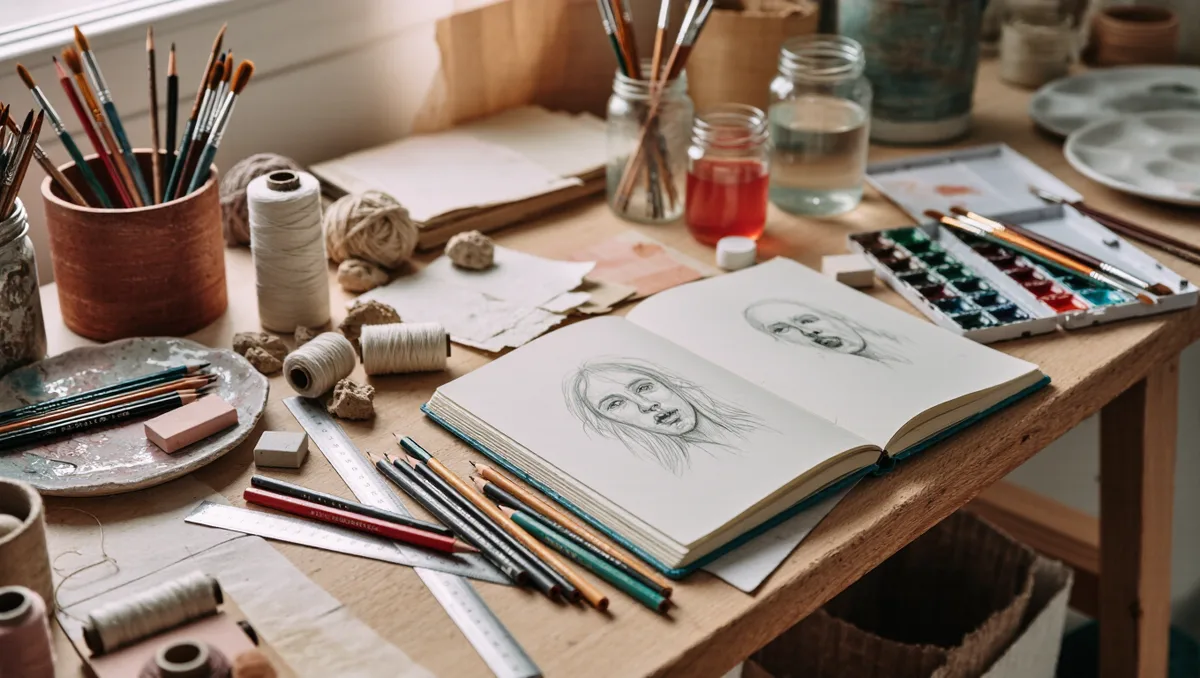
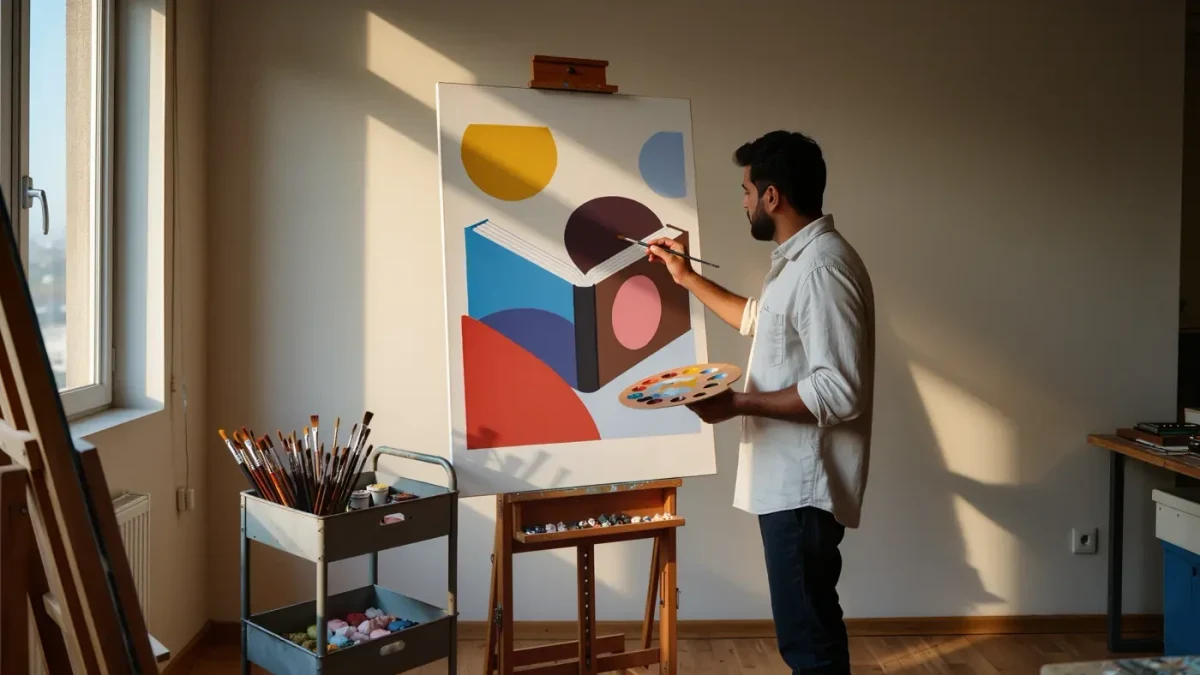
Final artwork is produced at print size with a few millimetres of bleed on every edge, on board or on heavy paper that can take repeated washes. Many illustrators still paint in watercolour or gouache on paper around 300 gsm, heavy enough to resist buckling when wet; others work entirely on screen, or paint traditionally and finish digitally. Because composition was settled at rough stage, attention turns fully to light, texture and colour. A typical toolkit for a painted book includes:
- hot-pressed or rough watercolour paper at 300 gsm, cut with bleed
- watercolour pans or tubes alongside designers' gouache for flat, opaque passages
- pencils and coloured pencils for linework and dry detail
- a flatbed scanner or high-resolution camera to capture each spread
The scanned files pass to the designer, who sets the type, and colour is checked once more on the printer's proofs near the end of production.
Why does the page turn matter so much?
A picture book is read aloud and turned by hand, which makes the turning page its built-in drumbeat. Illustrators place suspense before a turn and pay-off after it, letting the reader's own hand deliver the joke or the revelation. Timing a picture book is closer to editing a short film than to making a single image, and the instinct runs deep in the form's history: Randolph Caldecott, whose name has been carried by the American picture book medal awarded since 1938, built his Victorian gift books around movement from page to page, knowing that the physical act of turning did half the work. Anyone curious to trace the craft further will find thoughtful essays on picture books and their makers in the arts pages of BBC Culture, which covers illustration with genuine affection.
How long does the whole process take?
Timelines vary, but a picture book commonly moves from first thumbnails to printed edition across a year or more, with the artwork alone occupying several months. Around the drawing sit contract negotiations, text edits, design passes and proof checks, and along the way the miniature beginnings are forgotten by everyone except the illustrator. Yet everything a child notices — the rhythm, the surprises, the comfort of repeated shapes and colours — was settled when the drawings were still smaller than a postage stamp.
Why does the two-stage system endure?
The habit of deciding everything twice, first small and then large, protects everyone involved. Publishers commit to a book while it is still cheap to change, illustrators paint with the structure already proven, and children receive a book whose every surprise has been rehearsed in miniature. Digital tools have shortened some steps — thumbnails can be shuffled on a tablet and dummies emailed as PDFs — but the order of operations has barely shifted in a century, because it follows the logic of the form itself: a picture book is a sequence before it is a set of images, and sequences are cheapest to fix when they are smallest.