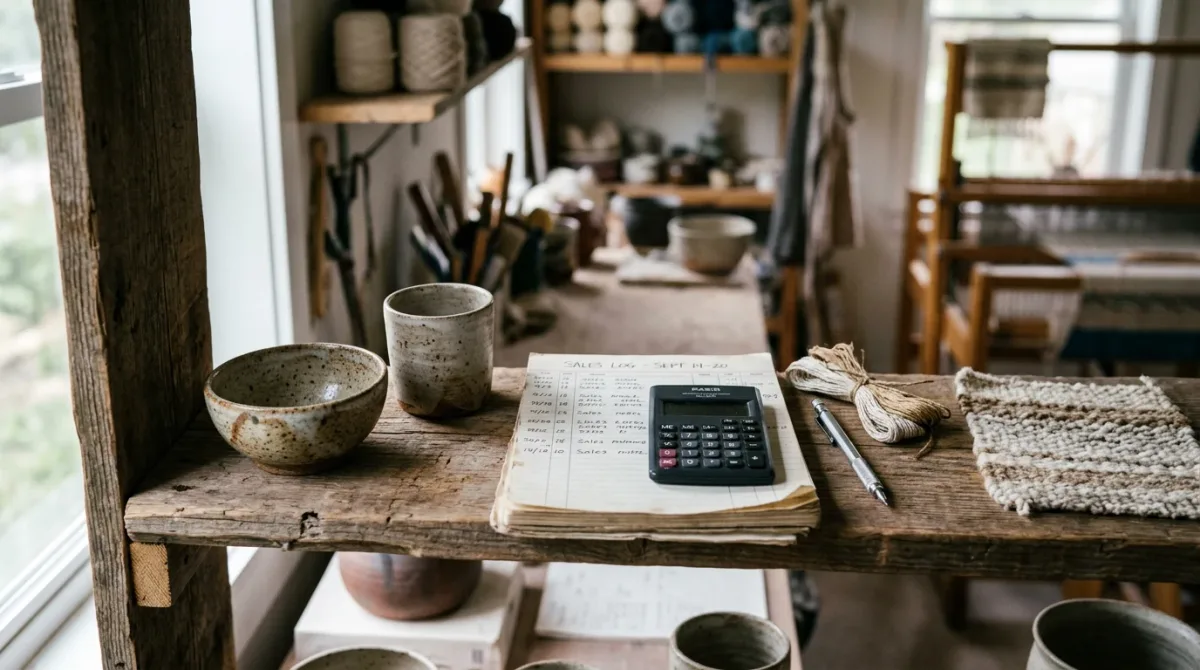
The UK's VAT registration threshold is £90,000 of taxable turnover in a rolling 12-month period, and once a craft business crosses it, registering with HMRC stops being optional. The figure applies to every pound of sales — studio, market stall or Etsy shop alike — not just profit, and it catches many independent makers by surprise the year their work finally starts selling well.
The threshold has not always sat at £90,000. It rose from £85,000 on 1 April 2024, the first increase in several years, with the deregistration threshold moving in step from £83,000 to £88,000. For a sector built on small operators, that gap between registering and deregistering matters: a maker whose turnover dips just under £88,000 the following year can apply to come back out of the VAT system rather than staying registered indefinitely.
How do you know when it's time to register?
HMRC applies two tests, and either one can trigger the obligation. The first looks backwards: if your total taxable turnover for the last 12 months goes over £90,000, you must register. The second looks forwards: if you expect your turnover to go over £90,000 in the next 30 days alone — a sudden bulk commission, say, or a viral order spike — you must register by the end of that 30-day window, with your effective registration date set to the day you first realised the threshold would be breached, not the day it actually was.
Registration itself has to happen within 30 days of the month-end in which you crossed the threshold, and the effective date of registration becomes the first day of the second month after that. It is a rolling calculation, not a tax-year one, so a maker needs to be checking turnover on a genuinely ongoing basis rather than once a year at accounts time.
What happens if you miss the deadline?
Registering late does not make the liability disappear. If you register late, you must pay VAT on any sales you've made since the date you should have registered, and HMRC can also charge a penalty, scaled to how much is owed and how late the registration was. Because the two tests apply independently, the safest habit for a growing maker business is to track turnover monthly rather than relying on an annual tally.
Registration is not only for businesses forced over the line. You can choose to register for VAT even if your turnover is less than £90,000, known as voluntary registration — a route some makers take so they can reclaim VAT on materials, kiln fuel, packaging or studio equipment, in exchange for charging VAT on what they sell.
Why does this matter more for craft businesses specifically?
The sector this threshold lands on is overwhelmingly small-scale. Craft sales are worth £3 billion to the UK economy, according to the Crafts Council, and the sector itself is dominated by micro enterprises and sole practitioners — precisely the kind of business most likely to tip over £90,000 gradually, through steady growth, rather than all at once. The Crafts Council also flags a separate wrinkle for makers selling through online marketplaces: for lower-value goods sold to customers abroad, it is often the marketplace itself, not the maker, that collects VAT at the point of sale under current online marketplace rules — a distinct system from the UK domestic registration threshold, and one worth checking against current guidance for the specific country a piece is shipping to.
FAQ
- What is the current VAT registration threshold? £90,000 of taxable turnover in a rolling 12-month period. It rose from £85,000 on 1 April 2024, alongside a deregistration threshold of £88,000, up from £83,000.
- Does it matter whether I sell online, at fairs, or both? No — HMRC's threshold counts total taxable turnover from all trading, so sales made in person at a market or fair count towards the same £90,000 figure as online sales.
- What happens if I register for VAT late? You still owe VAT on everything sold since the date you should have registered, and HMRC may add a penalty based on the amount owed and how late the registration was.
- Can I register before I reach £90,000? Yes. Voluntary registration is available below the threshold, and some makers use it to reclaim VAT on materials and equipment.
For the exact rules that apply to a specific business — including how taxable turnover is calculated and what counts as an exempt sale — HMRC's own VAT registration guidance is the definitive reference, alongside sector-specific support from bodies like the Crafts Council's business resources for makers weighing up growth against the paperwork that comes with it.
For a related crafts news perspective, read Crafts Council Calls For Bold Craft Installations At Collect Open 2027.